Comparisons / Head to head
Are heated blankets worth it?
Usually yes, and the reason is arithmetic rather than enthusiasm. Here is what one actually costs to own and run, what it displaces, and the four situations where the honest answer is no.
We earn a commission on some links here, at no extra cost to you. It does not change what we recommend or the order the picks appear in. How we are funded.

For most people in a cold bedroom, yes. A heated blanket that publishes 100 W costs about 15 cents for an eight-hour night and roughly $18 across a 120-night winter at the current US average rate. The question that decides it is not the price of the blanket, it is worth it compared to what.
Worth it compared to what
Almost every answer to this question online is a judgment about coziness. That is not a thing we can measure, and it is not actually what people are asking. The real question is whether the money and the electricity buy you more than the alternatives, and that is arithmetic.
There are only four realistic alternatives to being cold in bed, and a heated blanket beats three of them on cost by a wide margin.
| Approach | Rated draw | kWh over 8 hours | Cost |
|---|---|---|---|
| Heated blanket (published 100 W) | 100 W | 0.80 | 15 cents |
| Portable space heater | 1,500 W | 12.00 | $2.20 |
| Turning the central heating up overnight | Depends on the house | Not computable here | Not computable here |
| More blankets | 0 W | 0 | Nothing to run |
At $0.1834/kWh (EIA, average US residential, June 2026). The heating row is deliberately blank: what it costs to heat your house depends on the building, its insulation and its system, and any national figure for it is invented.
That last row is the honest competitor and nobody mentions it. A second duvet costs nothing to run, forever. What it cannot do is make a cold bed pleasant to get into, because it has no heat of its own, only insulation. If your complaint is the first ten minutes rather than the whole night, more blankets do not solve it, a heated one does, and so does the cheapest option of all: a hot water bottle.
What it costs to run, worked out
The formula is the same one used everywhere on this site: watts divided by a thousand, times hours, times your rate per kilowatt-hour.
| Run time | kWh | Cost | Working |
|---|---|---|---|
| 1 hour | 0.10 | 2 cents | 100 x 1 / 1000 x 0.1834 |
| 4 hours (an evening) | 0.40 | 7 cents | 100 x 4 / 1000 x 0.1834 |
| 8 hours (a night) | 0.80 | 15 cents | 100 x 8 / 1000 x 0.1834 |
| 30 nights at 8 hours | 24.00 | $4.40 | 100 x 240 / 1000 x 0.1834 |
| A 120-night winter at 8 hours | 96.00 | $17.61 | 100 x 960 / 1000 x 0.1834 |
Rate: US Energy Information Administration, Electric Power Monthly, Table 5.3 (June 2026): 18.34 cents per kWh, average US residential. Retrieved 2026-08-31.
Rated wattage is the ceiling, not the average. A thermostatic blanket cycles its element on and off once the bed is warm, so an all-night bill usually lands below the rated-watt figure. We publish the rated number because it is the only one the maker stands behind, and we do not estimate a duty cycle for a blanket we have not measured.
At the top of the published range, a 220 W dual-control queen with both sides running is about 32 cents a night and roughly $39 across a winter. At the bottom, the most energy efficient blankets we can verify sit at 100 W. That is the most any product we track can cost you, and it is still less than a single space-heater week. Detail on cost per month.
The purchase price, and why it barely matters
Heated bedding sits in the low-to-middle range of household textiles. We do not print prices in prose, because prices move and a number typed here would be wrong within a week; every buy button on this page reads the live retailer figure, or says Check price when there is not one.
What is worth saying is the shape of it. Across this category the purchase price is a one-time cost in the range of a few restaurant meals, and the running cost over a whole winter is smaller than the purchase price for every product we track. Nothing here is an appliance-scale commitment, which is why the deciding factor is whether you will use it rather than what it costs.
How long it lasts, which is the part people get wrong
A running cost of $18 a winter only means something across a realistic lifespan. The stated warranties in our set run to five years, and the broad consumer-safety guidance is to replace a heated blanket at around ten years regardless of how well it still works, because the element insulation degrades invisibly from flexing.
Two habits shorten that materially, and both are free to avoid: washing it far more often than it needs, and folding it hard for storage. Detail on how long do electric blankets last and storing a heated blanket.
When it is clearly worth it
- You get into a cold bed. This is the single best case and the one a heated blanket solves outright. Nothing else on the list above fixes the first ten minutes.
- You sleep somewhere you cannot heat well. A poorly insulated bedroom, a converted loft, a spare room you do not run the heating in.
- You are currently running a space heater in the bedroom. Then the blanket genuinely displaces something, and the arithmetic above is a straight saving of roughly $2 a night.
- You would turn the thermostat down if you were warm in bed. This is the case where a blanket saves real money rather than adding a small cost, and only you know whether it applies.
- Two of you disagree about temperature. A dual-control blanket or pad is the only thing on this list that can make one side of a bed warmer than the other.
The four picks, one per situation
These are not ranked against each other. They answer four different versions of the question, and all four publish a wattage, which is why every cost figure below is real.
The picks, with the numbers
Ranked on what the maker publishes, not on a score we invented. Tap a row for the full write-up, or go straight to the listing. Cost is 8 hours at the rated wattage and $0.1834/kWh.
| # | Product | Best for | Watts | Per night | Price |
|---|---|---|---|---|---|
| 1 | 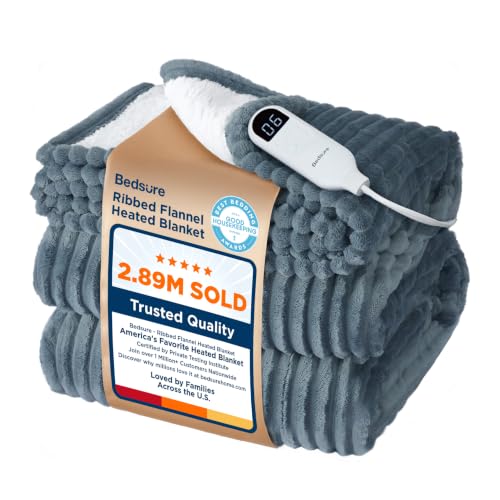 Top pickBedsure GentleSoft Heated ThrowSame 100 W rating and 10-hour timer as the preheat throw, in a ribbed flannel finish. Bedsure states it "operates at just 100W". | The ribbed-flannel face | 100 W | 15 cents | $39.99 - See it on Amazon |
| 2 |  Westinghouse Heated Blanket, Queen100 W stated on the listing, 10 heat levels and a 12-hour timer. The cheapest bed blanket to run of anything here that publishes a number at all. | The lowest published draw | 100 W | 15 cents | $84.99 - See it on Amazon |
| 3 | 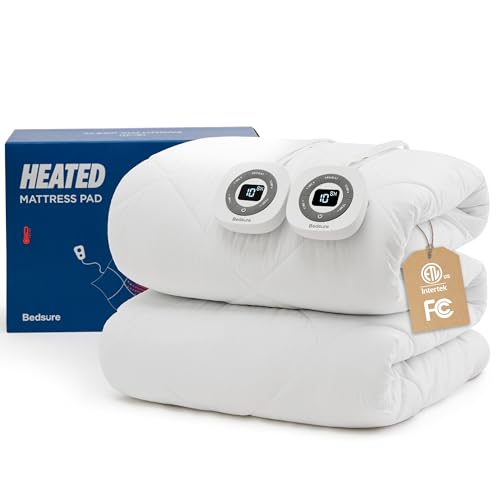 Bedsure Heated Mattress Pad, QueenDual 100 W controllers stated on the listing. It is the only heated mattress pad we found that publishes a figure at all. | The only pad with a published wattage | 200 W | 29 cents | $79.99 - See it on Amazon |
| 4 |  Bedsure GentleSoft Electric Blanket, QueenThe only queen here whose maker prints a wattage on the listing, and it happens to also be the one with two controllers. | Two sleepers who argue about heat | 220 W | 32 cents | $84.99 - See it on Amazon |
Sources: wattage from each maker's own published listing, cited on the card below. Cost is our arithmetic at the EIA rate, shown in full on cost to run.
#ad how we are funded - price as of September 19, 2026
The ribbed-flannel face
Bedsure GentleSoft Heated Throw
Rated wattage
100 W
8 hours costs
15 cents
#ad how we are funded - price as of September 19, 2026
Same 100 W rating and 10-hour timer as the preheat throw, in a ribbed flannel finish. Bedsure states it "operates at just 100W".
Where the wattage comes fromBedsure states the blanket "operates at just 100W" on standard 120V AC at 60Hz. Identical rating to the brand's other 50x60 throw.
100 W x 8 h = 0.80 kWh, x $0.1834/kWh = $0.15 per night
- Size
- 50" x 60"
- Heat settings
- 6 levels
- Auto shut-off
- Up to 10 hours (6 timer settings)
- Controllers
- 1
- Certification
- ETL and FCC certified
- Warranty
- Not stated on the listing
- Rated watts
- 100 W
- Voltage
- 120 V AC, 60 Hz
- Fabric
- Ribbed flannel with sherpa reverse
- Safety testing
- 74 in-house safety tests stated by the brand
- Model
- BS-100T
What it does well
- 100 W published
- Ribbed flannel face if you dislike flat microplush
- ETL and FCC certified
- Machine washable with the controller detached
Where it falls short
- Functionally the same blanket as the preheat model, without the preheat
- 6 heat levels
- No warranty term stated
Who this is forSomeone who prefers the ribbed texture and does not need the preheat cycle.
Skip it ifSkip it in favor of the preheat version. Same rating, same price bracket, one more useful feature.
The lowest published draw
Westinghouse Heated Blanket, Queen
Rated wattage
100 W
8 hours costs
15 cents
#ad how we are funded - price as of September 19, 2026
100 W stated on the listing, 10 heat levels and a 12-hour timer. The cheapest bed blanket to run of anything here that publishes a number at all.
Where the wattage comes fromWestinghouse states it directly in the first listing bullet: "a 100W, 60Hz heating blanket". This is a single-controller queen, so 100 W is the whole blanket rather than one side of it.
100 W x 8 h = 0.80 kWh, x $0.1834/kWh = $0.15 per night
- Size
- Queen, 84" x 90"
- Heat settings
- 10 levels
- Auto shut-off
- 1-12 hours, selectable
- Controllers
- 1
- Certification
- ETL and FCC certified
- Warranty
- Not stated on the listing
- Rated watts
- 100 W
- Voltage
- 120 V, 60 Hz
- Fabric
- Double-layer 200 GSM flannel
- Memory
- Yes, holds your last heat level
- Model
- KTHB-QAVV-Q
What it does well
- 100 W published, the lowest figure any queen here stands behind
- 10 heat levels and a timer selectable to any hour up to 12
- Memory function, so you are not resetting it every night
- Machine washable on cold, gentle
Where it falls short
- One controller only, so the whole bed runs at one temperature
- No warranty term on the listing
- Westinghouse's other queen listings do not publish a wattage, so the figure is model-specific
Who this is forA solo sleeper, or a couple who genuinely agree on temperature and want the lowest running cost on the page.
Skip it ifSkip it if you share a bed with someone who runs hot. There is one controller and no way to split the blanket.
The only pad with a published wattage
Bedsure Heated Mattress Pad, Queen
Rated wattage
200 W
8 hours costs
29 cents
#ad how we are funded - price as of September 19, 2026
Dual 100 W controllers stated on the listing. It is the only heated mattress pad we found that publishes a figure at all.
Where the wattage comes fromBedsure states 120V AC at 60Hz with dual 100W controllers. Both sides at full is 200W; one side alone is 100W. This is the only heated mattress pad in our checks with any published wattage.
200 W x 8 h = 1.60 kWh, x $0.1834/kWh = $0.29 per night
- Size
- Queen, fits up to 18" deep
- Heat settings
- 10 levels
- Auto shut-off
- 12 time settings, up to 12 hours
- Controllers
- 2 (dual control)
- Certification
- ETL and FCC certified
- Warranty
- Not stated on the listing
- Rated watts
- 200 W (dual 100 W)
- Voltage
- 120 V AC, 60 Hz
- Pocket depth
- Stretches to 18"
- Preheat
- Yes, with memory
- Model
- BS-HMQU-2
What it does well
- The only heated mattress pad here with a published wattage
- Dual control, so two sleepers get separate zones
- All-round elastic to 18" keeps it from shifting
- ETL and FCC certified
Where it falls short
- No warranty term stated
- No waterproof layer on this version
- 200 W with both zones at full is the highest published draw on this site
Who this is forTwo sleepers who want the bed warm before they get into it, and want the running cost on the table.
Skip it ifSkip it if you need waterproofing. Bedsure's cotton-top version has a TPU layer; this one does not.
Two sleepers who argue about heat
Bedsure GentleSoft Electric Blanket, Queen
Rated wattage
220 W
8 hours costs
32 cents
#ad how we are funded - price as of September 19, 2026
The only queen here whose maker prints a wattage on the listing, and it happens to also be the one with two controllers.
Where the wattage comes fromBedsure's listing states the blanket runs on 120V AC at 60Hz with dual 110W controllers. Two controllers at 110W each is 220W with both sides at full, or 110W if only one side is on, which is how most couples actually use it.
220 W x 8 h = 1.76 kWh, x $0.1834/kWh = $0.32 per night
- Size
- Queen, 84" x 90"
- Heat settings
- 6 levels
- Auto shut-off
- 8 hours (6 timer settings, 1-2-4-6-8-10h)
- Controllers
- 2 (dual control)
- Certification
- ETL and FCC certified
- Warranty
- Not stated on the listing
- Rated watts
- 220 W (dual 110 W)
- Voltage
- 120 V AC, 60 Hz
- Fabric
- 240 GSM flannel / 200 GSM sherpa
- Preheat
- Yes, 2h at level 6 then 6h at level 4
- Model
- BS-400B-S
What it does well
- Publishes a wattage, which almost nothing else in the category does
- Two controllers, so one side of the bed can run cold
- ETL and FCC certified with an 8-hour default auto shut-off
- Preheat cycle steps itself down instead of holding full heat all night
Where it falls short
- 6 heat levels where Sunbeam and Sealy give 10 to 12
- No warranty term on the listing
- 220 W with both sides up is the highest published draw of any bed blanket here
Who this is forCouples with different thermostats, and anyone who wants to know what the thing actually draws before buying it.
Skip it ifSkip it if you sleep alone. You are paying for a second controller you will never plug in, and the single-control Westinghouse publishes a lower 100 W.
How we ranked these
- Cheapest entry point first. This page is for someone deciding whether to spend anything at all, so the picks are ordered by how little you have to commit to find out whether you like heated bedding.
- Published wattage, as everywhere on this site. All four picks here state a rated draw, which is why the running cost in each row is a real number rather than an estimate.
- One pick per situation, not a ranked list. These four are not competing with each other. They answer four different versions of the question.
- Not ranked on warmth, softness or durability. We have not handled these products and cannot assess any of that.
We have not handled these products and we do not claim to have. The full method, including the rubric weights and what we refuse to claim, is on our methodology page.
What we cannot tell you
Worth it is partly a comfort judgment, and comfort is exactly the thing this site cannot assess. We have not handled any of these products. We do not know which fabric you will prefer, how warm any of them feels to you, or whether the controller will annoy you at 3am.
What we can tell you is the part that is checkable: what each one draws, what that costs, what the maker will commit to in writing, and where the specifications run out. If you want a verdict on softness, a site that has handled the products is a better source than this one, and we would rather say so than pretend. Our full method.
The short version
If your bed is cold, a heated blanket is one of the cheapest comfort purchases in the house to run: about 15 cents a night, about $18 a winter, against a space heater at fifteen times that. If your bed is already warm, it is a solution looking for a problem, and the honest answer is to keep your money.
Questions people actually ask
- Are heated blankets worth the money?
- In a cold bedroom, generally yes. A 100 W blanket costs about 15 cents for an eight-hour night and roughly $18 across a 120-night winter at $0.1834/kWh, and the purchase price is a one-time cost smaller than most household appliances. In an already-warm bedroom it usually goes unused.
- Do heated blankets save money on heating?
- Only if they actually let you turn the thermostat down. If the blanket sits on top of your existing heating and nothing else changes, it is a small new cost rather than a saving. If it displaces a space heater in the bedroom, it saves roughly $2 a night.
- Is a heated blanket cheaper than running the heating?
- Almost certainly, because heating one bed is a far smaller job than heating a building. We will not put a figure on the heating side: it depends on your house, its insulation and its system, and any national number for it would be invented.
- How much does a heated blanket cost to run per winter?
- About $18 at 100 W over 120 nights of eight hours, and about $39 at 220 W with both sides of a dual-control model running. Both at the US average residential rate. Full seasonal arithmetic.
- Are heated blankets worth it if I already have lots of blankets?
- Ordinary blankets insulate but produce no heat, so they keep you warm once you are warm and do nothing about a cold bed you are climbing into. If the first ten minutes is your complaint, more blankets will not fix it. If you are only cold later in the night, they might.
Sources
Every specification on this page traces to a published manufacturer listing or a government data source. Where a maker publishes no wattage, we say so rather than estimating one.
Read next
- Cost to runSourced watts, a cited US rate, and the arithmetic shown for every figure.
- Electric blanket vs a space heaterFifteen cents against $2.20 for the same night, plus where the heater still wins.
- Heated blanket vs heated mattress padOver you or under you, with both running costs and the case each one wins.
- How long do electric blankets last?Five-year warranties, ten-year replacement, and the wear you cannot see.
- The best electric blanketsSix bed-size blankets ranked on published wattage, controllers and warranty.