Comparisons / Head to head
Heated blanket vs heated mattress pad
One goes over you and warms the air; one goes under you and warms the bed. They solve different halves of the same problem and the running costs are closer than people expect.
We earn a commission on some links here, at no extra cost to you. It does not change what we recommend or the order the picks appear in. How we are funded.
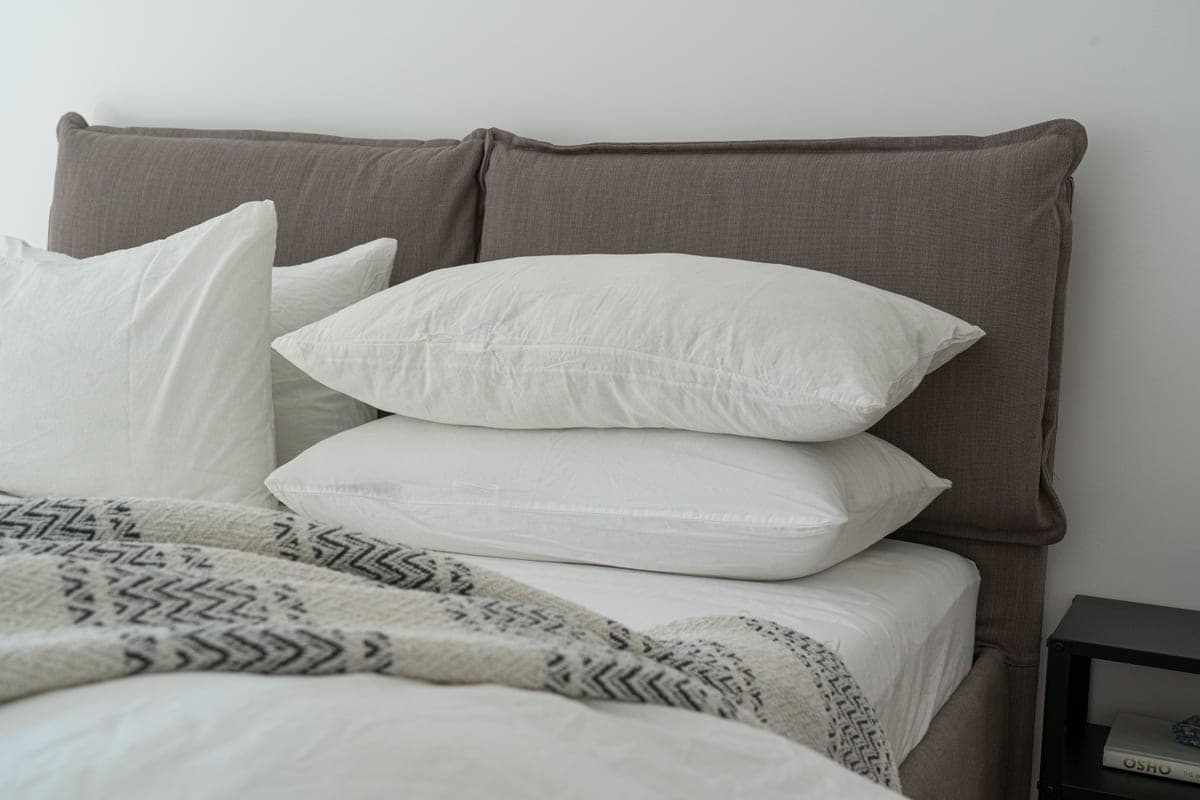
Buy a pad if the problem is getting into a cold bed: it warms the mattress from below and disappears when the bed is made. Buy a blanket if the problem is staying warm once you are in, or if you want to move it to the sofa. On published wattage the pad is very slightly cheaper: 200 W against 220 W at full.
The spec table
| Heated blanket | Heated mattress pad | |
|---|---|---|
| Where it goes | Over you, or under the duvet | On the mattress, under the fitted sheet |
| What it heats | The air around your body | The mattress, which then warms the bed |
| Rated watts (Bedsure, both zones) | 220 W (dual 110 W) | 200 W (dual 100 W) |
| 8 hours, both sides | 32 cents | 29 cents |
| 8 hours, one side | 16 cents | 15 cents |
| Visible when the bed is made | Yes | No |
| Can move it to a sofa | Yes | No |
| Element against skin | One layer or none | Fitted sheet between |
| Can be bunched or folded | Yes, and this is the main misuse | No, it is fitted |
| Summer storage | Comes off and needs storing | Can stay on the bed, unpowered |
Both products from the same brand so the comparison is like for like. Costs at $0.1834/kWh (EIA, June 2026). Rated watts are a ceiling; both cycle.
The real difference is when the heat arrives
The specification table makes them look similar. In use they are not, and the difference is about timing rather than warmth.
A pad heats the mattress, and a mattress is a large thermal mass. Switch it on an hour before bed and you get into a bed that is warm all the way through, which is a genuinely different experience from getting into a cold bed under a warm blanket. The warmth is also underneath you, where the mattress has been drawing heat out of you all night.
A blanket heats the air in the small space between you and the fabric. It is faster to feel and it stops the moment you lift the blanket. It is better at keeping a person warm who is already in bed and cold.
So the question is not which is warmer. It is whether your complaint is about getting in or about being in.
Cost: closer than you would guess
Comparing the two Bedsure products, which is the only like-for-like pairing available since Bedsure is the only brand publishing wattage on both formats:
| Run time | kWh | Cost | Working |
|---|---|---|---|
| 1 hour | 0.20 | 4 cents | 200 x 1 / 1000 x 0.1834 |
| 4 hours (an evening) | 0.80 | 15 cents | 200 x 4 / 1000 x 0.1834 |
| 8 hours (a night) | 1.60 | 29 cents | 200 x 8 / 1000 x 0.1834 |
| 30 nights at 8 hours | 48.00 | $8.80 | 200 x 240 / 1000 x 0.1834 |
| A 120-night winter at 8 hours | 192.00 | $35.21 | 200 x 960 / 1000 x 0.1834 |
Rate: US Energy Information Administration, Electric Power Monthly, Table 5.3 (June 2026): 18.34 cents per kWh, average US residential. Retrieved 2026-08-31.
Rated wattage is the ceiling, not the average. A thermostatic blanket cycles its element on and off once the bed is warm, so an all-night bill usually lands below the rated-watt figure. We publish the rated number because it is the only one the maker stands behind, and we do not estimate a duty cycle for a blanket we have not measured.
| Run time | kWh | Cost | Working |
|---|---|---|---|
| 1 hour | 0.22 | 4 cents | 220 x 1 / 1000 x 0.1834 |
| 4 hours (an evening) | 0.88 | 16 cents | 220 x 4 / 1000 x 0.1834 |
| 8 hours (a night) | 1.76 | 32 cents | 220 x 8 / 1000 x 0.1834 |
| 30 nights at 8 hours | 52.80 | $9.68 | 220 x 240 / 1000 x 0.1834 |
| A 120-night winter at 8 hours | 211.20 | $38.73 | 220 x 960 / 1000 x 0.1834 |
Rate: US Energy Information Administration, Electric Power Monthly, Table 5.3 (June 2026): 18.34 cents per kWh, average US residential. Retrieved 2026-08-31.
Rated wattage is the ceiling, not the average. A thermostatic blanket cycles its element on and off once the bed is warm, so an all-night bill usually lands below the rated-watt figure. We publish the rated number because it is the only one the maker stands behind, and we do not estimate a duty cycle for a blanket we have not measured.
Three cents a night apart. That is not a reason to choose either one, and anybody presenting a running-cost argument between these two formats is manufacturing a difference that the published numbers do not support.
Where a real cost difference appears is in how people use them. A pad is commonly run hard for an hour before bed and then switched off, because its job is done once the mattress is warm. A blanket more often runs all night. Used that way the pad costs substantially less, and that is a habit difference rather than a specification one, so we are not going to put a number on it.
Where each one clearly wins
The pad wins if
- The complaint is getting into a cold bed.
- You dislike feeling the wires. A fitted sheet sits between you and the element.
- You want the bed to look normal. It is invisible once made.
- There is a pet or a child on the bed. The element is under a sheet, out of reach of claws. See heated blankets and pets.
- You would rather not store anything in summer. It can stay on the bed unpowered.
The blanket wins if
- You are cold once you are already in bed, not before.
- You want to use it on the sofa as well as the bed.
- Your mattress is deep, or already has a topper, and you are unsure a pad will fit. Pads claim 18 inches and that stops being enough once a topper is on.
- You want the warmth adjustable during the night in a way you can feel immediately.
- You want the option of layering it over the duvet on the coldest nights.
The memory foam case, which decides it outright
One situation where the choice is not a preference. If you have a memory foam topper and you are not going to remove it, a pad has to go on top of the topper, under the fitted sheet, or it will not work: foam insulates, and a pad underneath one heats the underside of the foam.
If that placement is not practical, a blanket over you is the format that works, because it does not have to get heat through the foam at all. Full detail on heated bedding on memory foam and placement rules.
The picks, with the numbers
Ranked on what the maker publishes, not on a score we invented. Tap a row for the full write-up, or go straight to the listing. Cost is 8 hours at the rated wattage and $0.1834/kWh.
| # | Product | Best for | Watts | Per night | Price |
|---|---|---|---|---|---|
| 1 | 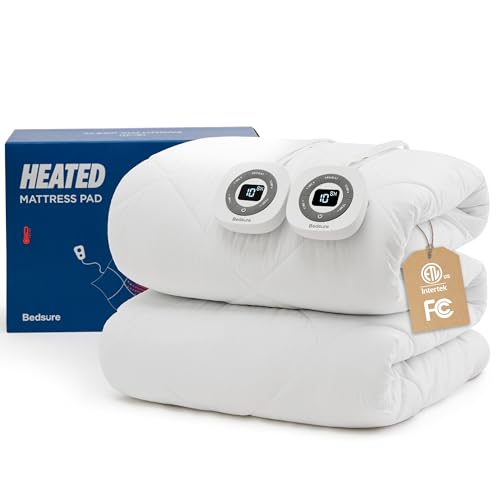 Top pickBedsure Heated Mattress Pad, QueenDual 100 W controllers stated on the listing. It is the only heated mattress pad we found that publishes a figure at all. | The only pad with a published wattage | 200 W | 29 cents | $79.99 - See it on Amazon |
| 2 |  Bedsure GentleSoft Electric Blanket, QueenThe only queen here whose maker prints a wattage on the listing, and it happens to also be the one with two controllers. | Two sleepers who argue about heat | 220 W | 32 cents | $80.74 - See it on Amazon |
Sources: wattage from each maker's own published listing, cited on the card below. Cost is our arithmetic at the EIA rate, shown in full on cost to run.
#ad how we are funded - price as of October 16, 2026
The only pad with a published wattage
Bedsure Heated Mattress Pad, Queen
Rated wattage
200 W
8 hours costs
29 cents
#ad how we are funded - price as of October 16, 2026
Dual 100 W controllers stated on the listing. It is the only heated mattress pad we found that publishes a figure at all.
Where the wattage comes fromBedsure states 120V AC at 60Hz with dual 100W controllers. Both sides at full is 200W; one side alone is 100W. This is the only heated mattress pad in our checks with any published wattage.
200 W x 8 h = 1.60 kWh, x $0.1834/kWh = $0.29 per night
- Size
- Queen, fits up to 18" deep
- Heat settings
- 10 levels
- Auto shut-off
- 12 time settings, up to 12 hours
- Controllers
- 2 (dual control)
- Certification
- ETL and FCC certified
- Warranty
- Not stated on the listing
- Rated watts
- 200 W (dual 100 W)
- Voltage
- 120 V AC, 60 Hz
- Pocket depth
- Stretches to 18"
- Preheat
- Yes, with memory
- Model
- BS-HMQU-2
What it does well
- The only heated mattress pad here with a published wattage
- Dual control, so two sleepers get separate zones
- All-round elastic to 18" keeps it from shifting
- ETL and FCC certified
Where it falls short
- No warranty term stated
- No waterproof layer on this version
- 200 W with both zones at full is the highest published draw on this site
Who this is forTwo sleepers who want the bed warm before they get into it, and want the running cost on the table.
Skip it ifSkip it if you need waterproofing. Bedsure's cotton-top version has a TPU layer; this one does not.
Two sleepers who argue about heat
Bedsure GentleSoft Electric Blanket, Queen
Rated wattage
220 W
8 hours costs
32 cents
#ad how we are funded - price as of October 16, 2026
The only queen here whose maker prints a wattage on the listing, and it happens to also be the one with two controllers.
Where the wattage comes fromBedsure's listing states the blanket runs on 120V AC at 60Hz with dual 110W controllers. Two controllers at 110W each is 220W with both sides at full, or 110W if only one side is on, which is how most couples actually use it.
220 W x 8 h = 1.76 kWh, x $0.1834/kWh = $0.32 per night
- Size
- Queen, 84" x 90"
- Heat settings
- 6 levels
- Auto shut-off
- 8 hours (6 timer settings, 1-2-4-6-8-10h)
- Controllers
- 2 (dual control)
- Certification
- ETL and FCC certified
- Warranty
- Not stated on the listing
- Rated watts
- 220 W (dual 110 W)
- Voltage
- 120 V AC, 60 Hz
- Fabric
- 240 GSM flannel / 200 GSM sherpa
- Preheat
- Yes, 2h at level 6 then 6h at level 4
- Model
- BS-400B-S
What it does well
- Publishes a wattage, which almost nothing else in the category does
- Two controllers, so one side of the bed can run cold
- ETL and FCC certified with an 8-hour default auto shut-off
- Preheat cycle steps itself down instead of holding full heat all night
Where it falls short
- 6 heat levels where Sunbeam and Sealy give 10 to 12
- No warranty term on the listing
- 220 W with both sides up is the highest published draw of any bed blanket here
Who this is forCouples with different thermostats, and anyone who wants to know what the thing actually draws before buying it.
Skip it ifSkip it if you sleep alone. You are paying for a second controller you will never plug in, and the single-control Westinghouse publishes a lower 100 W.
The verdict
For most people asking this question, the pad is the better first purchase, because the complaint that sends people looking is almost always a cold bed rather than a cold night. It is invisible, it cannot be bunched, it keeps the element off your skin, and it stays on the bed in summer.
Buy the blanket instead if you want the flexibility to move it, if your bed is too deep for a pad to fit properly, or if you are genuinely cold in bed rather than cold getting in. And do not choose between them on running cost, because at three cents a night the published numbers do not support a decision either way.
Questions people actually ask
- Is a heated mattress pad better than an electric blanket?
- For getting into a cold bed, yes: it warms the mattress from below, is invisible when the bed is made, and keeps the element under a fitted sheet. For staying warm once you are in bed, or for moving to a sofa, the blanket is better.
- Which is cheaper to run, a heated blanket or a mattress pad?
- Almost identical. Bedsure's dual-zone pad publishes 200 W and its dual-control queen blanket 220 W, so about 29 cents against 32 cents for an eight-hour night. That is not a reason to choose either.
- Can you use a heated mattress pad and an electric blanket together?
- The manufacturers do not address the combination, and layering two heated products means two elements with bedding trapped between them. Given every maker's warnings about trapped heat, we would not.
- Does a heated mattress pad go under a memory foam topper?
- No. Foam insulates, so a pad underneath heats the underside of the topper rather than you. It goes on top of the topper, under the fitted sheet.
Sources
Every specification on this page traces to a published manufacturer listing or a government data source. Where a maker publishes no wattage, we say so rather than estimating one.
Read next
- The best heated mattress padsSix pads compared, and the single brand that tells you what its pad draws.
- The best electric blanketsSix bed-size blankets ranked on published wattage, controllers and warranty.
- Where a heated blanket can and cannot goHeat rises and trapped heat is the hazard. Every placement follows.
- Heated bedding on memory foamFoam insulates, so the element goes above it. Plus the depth trap nobody warns about.