Cost to run / Guide
Is a blanket cheaper than turning the heating up?
Almost certainly yes, and we still will not put a national figure on your heating. Here is why no honest site can, and how to get the real number off your own bill in about ten minutes.
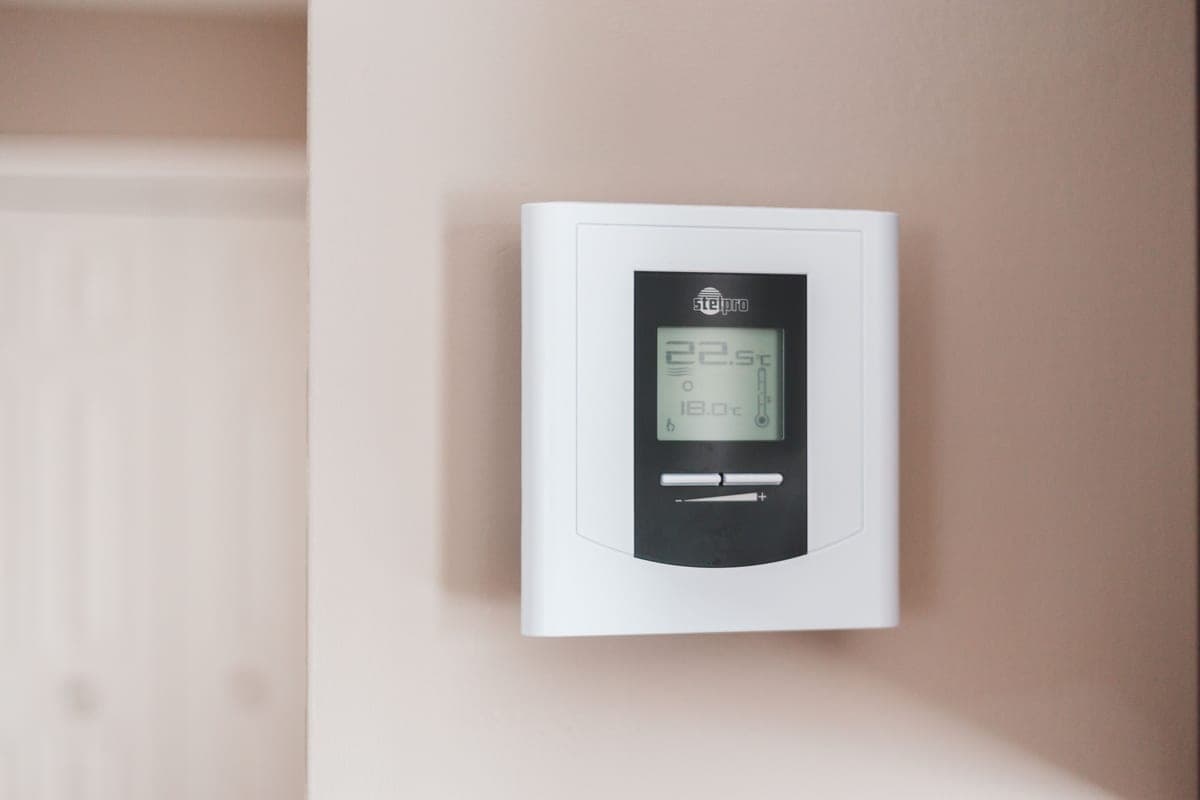
Almost certainly cheaper, because heating one bed is a far smaller job than heating a building. The blanket side is exactly knowable: about 15 cents for an eight-hour night at 100 W. The heating side is not, and any site giving you a national figure for it has invented one.
Why we refuse to publish the other number
This is the one comparison on the site where we deliberately leave half the table blank, and it is worth explaining rather than just doing.
What it costs to heat your house overnight depends on the floor area, the insulation, the airtightness, the heating system and its efficiency, the fuel and its price, the thermostat setpoint, and the outside temperature. Change any one and the answer moves by a large factor. There is no national average that survives contact with an individual house.
So when a page tells you a heated blanket saves you a specific number of dollars against central heating, that figure was either assumed into existence or copied from somebody who assumed it. We would rather hand you the method.
| Run time | kWh | Cost | Working |
|---|---|---|---|
| 1 hour | 0.10 | 2 cents | 100 x 1 / 1000 x 0.1834 |
| 4 hours (an evening) | 0.40 | 7 cents | 100 x 4 / 1000 x 0.1834 |
| 8 hours (a night) | 0.80 | 15 cents | 100 x 8 / 1000 x 0.1834 |
| 30 nights at 8 hours | 24.00 | $4.40 | 100 x 240 / 1000 x 0.1834 |
| A 120-night winter at 8 hours | 96.00 | $17.61 | 100 x 960 / 1000 x 0.1834 |
Rate: US Energy Information Administration, Electric Power Monthly, Table 5.3 (June 2026): 18.34 cents per kWh, average US residential. Retrieved 2026-08-31.
Rated wattage is the ceiling, not the average. A thermostatic blanket cycles its element on and off once the bed is warm, so an all-night bill usually lands below the rated-watt figure. We publish the rated number because it is the only one the maker stands behind, and we do not estimate a duty cycle for a blanket we have not measured.
Getting your own heating number, in about ten minutes
This works for electric heating directly and for gas with one extra step. It is not precise to the cent and it does not need to be: the difference you are looking for is large.
- 1Pick two comparable nights. Same rough outside temperature, same people at home, ideally the same day of the week. One with the overnight heating as usual, one with it turned down and the blanket on instead.
- 2Read the meter before bed and after you get up on each of those nights. Most smart meters will also give you an overnight figure directly, which is easier.
- 3Subtract. The difference between the two nights, in kWh, is what the overnight heating was costing you, minus what the blanket cost. That is the number nobody else can hand you.
- 4Multiply by your rate. It is on your bill in cents per kWh. For gas, your bill is in therms or ccf rather than kWh, so use the cost per unit shown on the bill directly rather than converting.
- 5Repeat once if you can. Two pairs of nights is meaningfully better than one, because outside temperature does most of the work and one cold snap can swamp the comparison.
The result is specific to your house, your system and your winter, which makes it worth more than any figure we could publish. Our per-kWh arithmetic is on work out what your own blanket costs if you want to run the blanket side alongside it.
The direction, which we can state
Refusing to give a number is not the same as having nothing to say. The physics points one way and it points hard.
| Approach | What it warms | Rough volume | Published cost |
|---|---|---|---|
| Heated blanket | The few cubic feet under a blanket, against a body already producing about 100 W of its own heat | Under 20 cubic feet | 15 to 32 cents a night |
| Space heater | One room, continuously losing heat through its walls and windows | Roughly 1,000-2,000 cubic feet | $2.20 a night at 1,500 W |
| Central heating overnight | The whole house, including rooms nobody is in | Roughly 8,000-20,000 cubic feet | Not computable from a table |
Blanket and heater figures at $0.1834/kWh (EIA, US residential average, June 2026). Volumes are illustrative of scale, not measurements of your home. The heating row is deliberately blank.
A heated blanket is not more efficient in any thermodynamic sense. It is doing a job that is smaller by two or three orders of magnitude, and that is where the saving comes from. The one comparison we can complete on both sides is electric blanket versus a space heater, which comes out at roughly fifteen to one.
The condition that decides whether you save anything
This is the part most pages skip, and it is the part that determines whether the blanket is a saving or a new cost.
A heated blanket only saves money if it actually lets you turn the thermostat down. If it does, you are substituting 0.8 kWh for a much larger number and the saving is real. If the heating runs exactly as before and the blanket is added on top, you have added about $18 to a 120-night winter and saved nothing.
Which of those describes your household is a fact about you rather than about the blanket, and only you can answer it. The wider version of that question is on are heated blankets worth it.
Where turning the heating down is the wrong move
Three cases, because a page arguing for the blanket should say where the argument stops.
- Pipes. If dropping the overnight setpoint takes parts of the house near freezing, that is a burst-pipe risk and the heating stays on. No blanket addresses a building problem.
- Damp and condensation. A house that runs cold and humid grows mold. If your home is prone to it, a colder overnight house is not a free saving.
- Anyone in the house who cannot regulate their own temperature. Infants, some older or unwell people. A colder house plus a heated blanket is not a substitute for a warm room, and the blanket has its own cautions on who should not use one. Nothing here is medical advice.
Outside those, the sensible pattern is the one this whole site points at: heat the bed rather than the building, and check the number on your own meter rather than taking anyone's word for it.
Questions people actually ask
- Is it cheaper to use an electric blanket than central heating?
- Almost certainly, because heating one bed is a far smaller job than heating a house. We will not publish a figure for the heating side: it depends on your building, insulation, system and fuel, and any national number for it is invented. The method for getting your own is above.
- How much can I save using an electric blanket instead of heating?
- Only your own meter can tell you. Read it before bed and after waking on two comparable nights, one with the heating as usual and one with it turned down and the blanket on, then multiply the difference by the rate on your bill.
- Does an electric blanket actually reduce heating bills?
- Only if it lets you turn the thermostat down. If the heating runs exactly as before and the blanket is added on top, it adds roughly $18 to a 120-night winter at 100 W and saves nothing.
- How much electricity does an electric blanket use compared to a radiator?
- Against a 1,500 W portable electric heater, a 100 W blanket uses about one fifteenth as much for the same eight hours: 0.8 kWh against 12 kWh. Against a central heating system the comparison is not computable from published figures. Against a hot water bottle the blanket costs more, by roughly four to five times.
Sources
Every specification on this page traces to a published manufacturer listing or a government data source. Where a maker publishes no wattage, we say so rather than estimating one.
Read next
- Electric blanket vs a space heaterFifteen cents against $2.20 for the same night, plus where the heater still wins.
- Work out what your own blanket costsThree numbers, one line of arithmetic, and where to find each of them.
- Are heated blankets worth it?About 15 cents a night against a $2.20 space heater, plus the four cases where the answer is no.
- What it costs per month, and per winter$4.40 a month at 100 W, and why payback is the wrong question.